





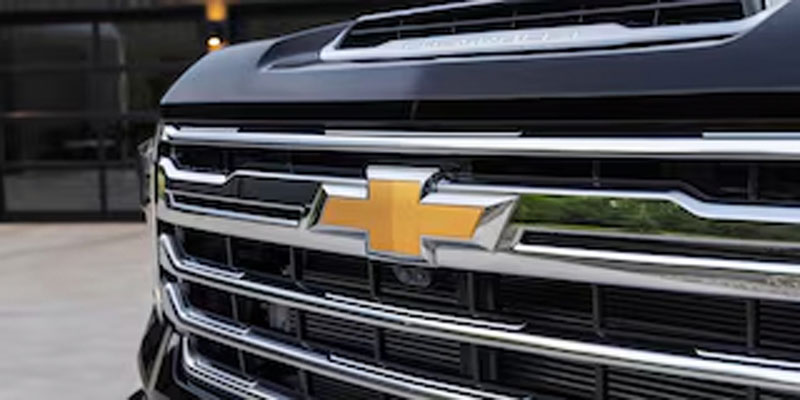
Chevrolet’s 2026 model year represents more than a routine refresh. It signals a deliberate return to ideas that once defined entire segments, paired with modern engineering that reflects where the market is headed. With the reintroduction and evolution of nameplates such as the Santa Cruz, Montana, El Camino, and Bolt, Chevrolet is not merely expanding its lineup—it is reconnecting with its own design legacy while answering contemporary demands for efficiency, versatility, and innovation.
This new wave of 2026 models blends nostalgia with forward motion, bringing back familiar concepts in forms that are unmistakably modern.
Chevrolet Santa Cruz: A Concept Realized at Last
The Chevrolet Santa Cruz first appeared as a concept vehicle in 2010, envisioned as a crossover pickup that blurred the line between SUV comfort and truck utility. At the time, the market was not ready. Compact pickups were niche, and the idea was shelved before reaching production.
Fast forward to 2026, and the automotive landscape has changed. The Santa Cruz returns as a production-ready model shaped by over a decade of shifting consumer preferences. Today’s buyers want maneuverability, efficiency, and versatility in one footprint. The 2026 Santa Cruz answers that call with a unibody platform, refined ride dynamics, and a functional open bed designed for real use rather than novelty.
Key to its appeal is balance. The Santa Cruz is engineered for drivers who need light hauling capability without sacrificing daily drivability. Advanced driver-assistance systems, flexible cargo solutions, and a modern interior define its role as a lifestyle vehicle rather than a traditional work truck. It is not a replacement for full-size pickups. It is a new interpretation of what a pickup can be.
Chevrolet Montana: A Global Pickup Finds Its Moment
The Chevrolet Montana has long been a success story outside the United States, particularly in South America. Introduced in the early 2000s, the Montana built a reputation as a compact, efficient pickup tailored for urban environments and light-duty work. For years, it remained a global offering, absent from the U.S. market.
The 2026 lineup marks a turning point. The Montana enters Chevrolet’s broader strategy as fuel efficiency, right-sized trucks, and urban practicality gain importance. Designed with a smaller footprint than traditional pickups, the Montana prioritizes efficiency, maneuverability, and cost-conscious ownership.
Its evolution reflects modern expectations. Improved chassis rigidity, updated powertrains, and enhanced interior materials elevate it beyond its utilitarian roots. The 2026 Montana is positioned as an entry-level pickup for drivers who want utility without excess, making it particularly relevant in cities and growing suburban markets.
Chevrolet El Camino: A Nameplate Reimagined
Few Chevrolet vehicles carry the cultural weight of the El Camino. Introduced in 1959 and produced intermittently until 1987, the El Camino was neither car nor truck—it was both. Built on passenger car platforms, it became a symbol of versatility and style, earning a loyal following across decades.
Its discontinuation left a void that no direct successor filled. For 2026, Chevrolet brings the El Camino back with restraint and intention. This is not a retro remake. It is a reinterpretation.
The modern El Camino adopts contemporary proportions, improved structural integrity, and modern safety standards while preserving its core identity: a sleek profile paired with functional cargo space. Designed for drivers who value aesthetics as much as capability, the 2026 El Camino targets a niche underserved by SUVs and traditional trucks alike.
It stands as a reminder that innovation does not always mean abandoning the past. Sometimes, it means refining it.
Chevrolet Bolt: The Evolution of an Electric Pioneer
The Chevrolet Bolt debuted in 2016 as one of the first truly accessible long-range electric vehicles. It played a critical role in normalizing EV ownership, offering practicality without luxury pricing. After its initial run and subsequent updates, the Bolt was temporarily discontinued, leaving a gap in Chevrolet’s electric strategy.
The 2026 Bolt returns transformed. Built on lessons learned from earlier iterations, it benefits from advancements in battery efficiency, thermal management, and software integration. Range improvements, faster charging capability, and a more refined driving experience position the Bolt as a cornerstone of Chevrolet’s electrified future.
What sets the 2026 Bolt apart is maturity. It is no longer an experiment. It is a fully realized electric vehicle designed for mass adoption, urban commuting, and long-term ownership.
A Strategic Lineup with Purpose
Together, these models reflect a broader philosophy guiding Chevrolet’s 2026 lineup. Each vehicle fills a specific role. Each draws from history without being constrained by it. The Santa Cruz addresses modern lifestyle needs. The Montana brings global efficiency to new markets. The El Camino revives a cultural icon with modern discipline. The Bolt reinforces Chevrolet’s commitment to accessible electrification.
This is not expansion for expansion’s sake. It is alignment. Chevrolet’s latest additions signal a lineup shaped by intention, adaptability, and respect for the brand’s legacy—reintroduced not as nostalgia pieces, but as vehicles designed for the road ahead.
Connect with us


